Real or artificial: the comparison without the folklore
Cost per season is a formula, not a number we will invent. Here is that formula, plus the storage, effort and lifespan facts that decide it either way.
By Sawyer V. · Published
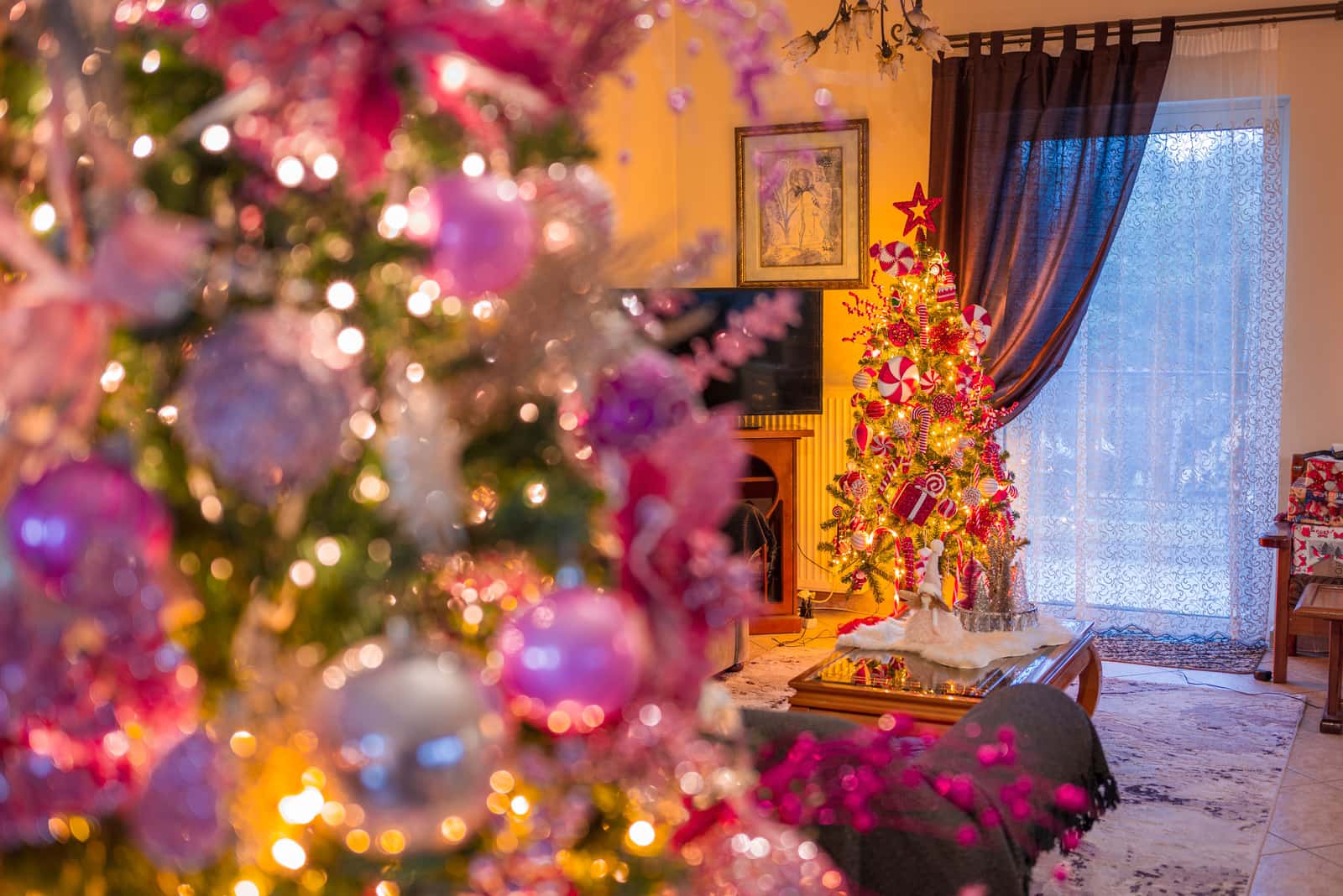
The real-versus-artificial argument is usually settled with numbers somebody remembered. We are not going to do that. What we will do is give you the formula the cost question actually reduces to, tell you which inputs only you can supply, and then compare the two on the things that can be checked without a price tag.
Those turn out to be the decisive ones anyway: how much space the artificial option occupies for the other eleven months, how much work each takes, and what happens in year six.
Wreath & Watt earns a commission on qualifying purchases made through the Amazon links on this page. It costs you nothing and it does not change the order of the picks — here is exactly how we are funded.
The cost question, as a formula
An artificial tree is a capital purchase spread over the seasons you keep it. A real tree is an operating cost repeated every year. That is the whole comparison, and it is one line of arithmetic.
The arithmetic
- Artificial cost per season = purchase price / seasons kept
- Real cost per season = this year's price, every year
- Break-even seasons = artificial price / annual real price
- Example with your own figures: a tree at 5x the price of a cut tree
- 5x / 1x = breaks even in the fifth season, then costs nothing further
Break-even is the artificial price divided by the annual real price. Fill in your own two numbers — we deliberately do not publish either.
The eleven months nobody factors in
The strongest argument against an artificial tree has nothing to do with how it looks. It is that you are buying a large object and then agreeing to house it for the rest of the year, and in a small home that is a real cost paid in floor area.
The arithmetic
- Elf Stor tree bag: 67 x 28 x 24 in
- 67 x 28 x 24 = 45,024 cubic inches
- 45,024 / 1,728 = 26.1 cubic feet
- A 27 gal tote is 3.6 cubic feet
- 26.1 / 3.6 = 7.2
A stored artificial tree occupies about the same volume as seven storage totes, every month of the year.
If that space exists, the artificial case is strong. If it does not, a real tree is the honest answer and no amount of tip count changes it. The bag itself is worth buying at the same time as the tree rather than a year later — the Elf Stor bag is the one that publishes its actual dimensions, so you can confirm it fits your shelf before it arrives. The method is on how to store an artificial tree.
Side by side, on what can be checked
| Real tree | Artificial tree | |
|---|---|---|
| Annual effort | Buy, transport, dispose — every year | Assemble and shape, then store |
| Storage burden | None | About 27 cu ft for a 9 ft tree |
| Watering | Required, throughout | None |
| Needle drop | Yes, throughout the season | None, but tips shed with age |
| Published density figure | None — no cut tree publishes one | Tip count, where the maker states it |
| Lights | Bought separately, every configuration open | Pre-lit or unlit; pre-lit ties you to the string |
| Cost shape | Repeats annually | One purchase, divided by seasons kept |
The row that decides it for most households is storage, not cost — and it is the one that never appears in the comparison.
Source: Published manufacturer figures for the artificial column; the real-tree column describes the format, not a specific product, and carries no figures we cannot source.
If artificial, which one
The published tip count is the number that correlates with looking like a tree, and the makers who publish it are the ones worth buying. The National Tiffany Fir publishes 1,878 tips at 7.5 feet, which is 250 tips per foot and the highest density we can verify. The Puleo Aspen Fir publishes 1,319 tips with 700 lights, the best light-to-tip ratio here at 53 lights per 100 tips.
If the pre-lit failure mode worries you — and it should, because a dead built-in string retires an otherwise fine tree — the unlit spruce at 1,346 published tips lets you light it yourself and re-light it in five years. The full argument is on pre-lit vs unlit, and the complete ranking is on the best artificial Christmas trees.
The honest summary
Buy real if you have nowhere to store a tree, if the annual trip is part of the point, or if you move often. Buy artificial if you have the 27 cubic feet, if you intend to keep it long enough for the division to work in your favour, and if you would rather spend the first Saturday of December shaping branches than tying a tree to a car roof. Anyone telling you one of those is objectively correct is selling something.
Our picks for this
| # | Product | Best for | Score | Price |
|---|---|---|---|---|
| 1 |  National Tree Company Tiffany Fir slim, 7.5 ft, pre-lit1,878 tips, 600 clear lights, slim profile National Tree Company Tiffany Fir slim, 7.5 ft, pre-lit1,878 tips, 600 clear lights, slim profile | The highest published tip count on this list | 8.5/ 10 | $324.99Amazon #ad · Price as of October 20, 2026 · Disclosure |
| 2 |  Puleo International Aspen Fir, 7.5 ft, pre-lit, 700 lights1,319 tips, 700 clear lights Puleo International Aspen Fir, 7.5 ft, pre-lit, 700 lights1,319 tips, 700 clear lights | The best light-to-tip ratio here | 8.5/ 10 | $259.00Amazon #ad · Price as of October 20, 2026 · Disclosure |
| 3 |  Best Choice Products unlit spruce, 7.5 ft, 1,346 tips1,346 tips, unlit Best Choice Products unlit spruce, 7.5 ft, 1,346 tips1,346 tips, unlit | Anyone who wants to choose their own lights | 6.8/ 10 | |
| 4 |  Elf Stor rolling tree storage bag, up to 12 ft, 67 x 28 x 24 in67 in x 28 in x 24 in — the only published box dimensions here Elf Stor rolling tree storage bag, up to 12 ft, 67 x 28 x 24 in67 in x 28 in x 24 in — the only published box dimensions here | Anyone who wants the actual dimensions before buying | 9.0/ 10 |
Scores are our own weighting of published manufacturer specifications, explained in full on how we research. They are not test results. We have not tested these products.
The picks, in detail
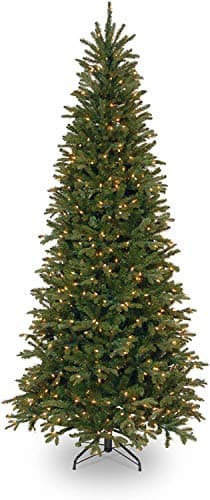
#1 — The highest published tip count on this list
National Tree Company Tiffany Fir slim, 7.5 ft, pre-lit
1,878 tips, 600 clear lights, slim profile
8.5
/ 10
Our top artificial tree on published numbers: the densest tip count here, in a profile that fits real rooms.
Published specifications
- Height
- 7.5 ft
- Branch tips
- 1,878
- Lights
- 600 clear
- Profile
- Slim
- Stand
- Included
- Tips per foot
- 250 (1,878 over 7.5 ft — our arithmetic)
Our scoring
- Published tip count
- 10 / 10
- Density per foot
- 9 / 10
- Light provision
- 6 / 10
- Spec completeness
- 9 / 10
Good
- 1,878 tips on a slim tree is unusually dense; tip count is the single best published proxy for how full a tree looks
- Slim profile fits a corner or a narrow hall without dropping to a pencil tree's sparseness
Watch out
- 600 lights across 7.5 ft is on the low side; plan on adding a string if you want a bright tree
- Pre-lit means the lights and the tree retire together
#ad · Price as of October 20, 2026 · How we are funded
Tip count, light count and height from the National Tree Company Amazon listing (ASIN B005CXFZLY), retrieved 2026-09-04.
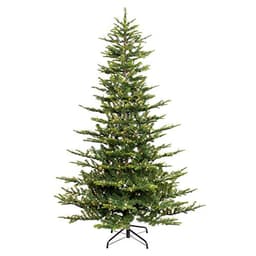
#2 — The best light-to-tip ratio here
Puleo International Aspen Fir, 7.5 ft, pre-lit, 700 lights
1,319 tips, 700 clear lights
8.5
/ 10
Buy this one if you want it bright out of the box. Buy the Tiffany Fir if you want it full and will add your own lights.
Published specifications
- Height
- 7.5 ft
- Branch tips
- 1,319
- Lights
- 700 clear
- Stand
- Sturdy metal, included
- Lights per 100 tips
- 53 (700 / 1,319 — our arithmetic)
Our scoring
- Published tip count
- 9 / 10
- Density per foot
- 7 / 10
- Light provision
- 9 / 10
- Spec completeness
- 9 / 10
Good
- 700 lights is the most on this list, and the lights-per-tip ratio is the highest
- Full profile rather than slim, so it reads as a traditional tree
Watch out
- 1,319 tips is noticeably less dense than the Tiffany Fir at the same height
#ad · Price as of October 20, 2026 · How we are funded
Tip and light counts from the Puleo Amazon listing (ASIN B01N3QFZHR), retrieved 2026-09-04.
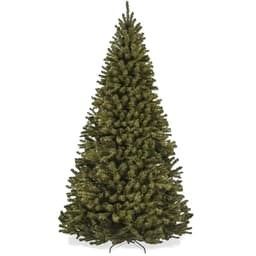
#3 — Anyone who wants to choose their own lights
Best Choice Products unlit spruce, 7.5 ft, 1,346 tips
1,346 tips, unlit
6.8
/ 10
The long-game choice. An unlit tree outlives every pre-lit one on this list, because the failure that kills them cannot happen.
Published specifications
- Height
- 7.5 ft
- Branch tips
- 1,346
- Lights
- None — unlit
- Base
- Metal
Our scoring
- Published tip count
- 9 / 10
- Density per foot
- 7 / 10
- Light provision
- 3 / 10
- Spec completeness
- 8 / 10
Good
- Unlit means a dead light section never retires the whole tree
- You pick the color temperature instead of inheriting it
Watch out
- You are buying and hanging 700-plus lights yourself, which is an hour you did not plan for
Tip count from the Amazon listing (ASIN B01L9X99GC), retrieved 2026-09-04.
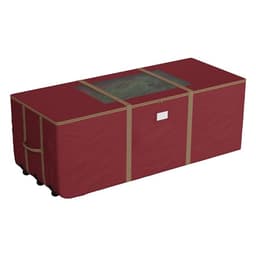
#4 — Anyone who wants the actual dimensions before buying
Elf Stor rolling tree storage bag, up to 12 ft, 67 x 28 x 24 in
67 in x 28 in x 24 in — the only published box dimensions here
9.0
/ 10
Our top tree bag purely because it publishes its dimensions. Every other bag asks you to trust 'fits up to 9 ft'.
Published specifications
- Fits
- Disassembled artificial trees up to 12 ft
- Dimensions
- 67 in x 28 in x 24 in
- Fabric
- 600D Oxford canvas, water resistant, PVC lined
- Mobility
- Three rollerblade-style wheels
- Closure
- Zipper, nylon handles, interior adjustable strap
Our scoring
- Published dimensions
- 10 / 10
- Fabric grade
- 9 / 10
- Mobility
- 9 / 10
- Closure
- 8 / 10
Good
- Published external dimensions, so you can check it against your shelf before it arrives
- 67 inches long takes the longest section of even a 12-foot tree without forcing it
- 24 inches tall is low enough to slide onto a standard garage shelf, which the bag it replaces was not
Watch out
- 67 inches long needs a deep shelf or a clear floor run
- Folds flat when empty, but the wheels stop it stacking under anything
Dimensions and fabric from the Amazon listing (ASIN B078HH3CDL), verified via the Creators API 2026-09-24. Replaces the discontinued Camerons rolling bag (B00O4EWFWY).
Questions
›How many years does it take an artificial tree to pay for itself?
Divide the artificial tree’s price by what a cut tree costs you locally each year. That quotient is the break-even season. Both numbers are yours to supply — cut-tree prices are local and seasonal, and we do not publish prices we have not checked.
›How much space does an artificial tree take to store?
A nine-foot tree in a bag that publishes its dimensions comes out at about 27 cubic feet, which is roughly seven and a half 27-gallon totes. That is the figure most comparisons leave out and the one that decides it in a small home.
›Do artificial trees look obviously fake?
Density is what gives it away, and density is measurable: tips per foot, from the manufacturer’s published tip count. A tree at 250 tips per foot reads very differently from one that declines to publish a figure at all.
›Is a pre-lit artificial tree a good idea?
It saves an hour every December and creates a single point of failure: when the built-in string dies, an otherwise sound tree becomes hard to keep. If you plan to own the tree for a decade, unlit is the more repairable choice.
Sources
- National Tree Tiffany Fir slim listing (ASIN B005CXFZLY) — 1,878 tips, 600 lights, 7.5 ft
- Puleo Aspen Fir pre-lit listing (ASIN B01N3QFZHR) — 1,319 tips, 700 lights, 7.5 ft
- Best Choice Products unlit spruce listing (ASIN B01L9X99GC) — 1,346 tips, unlit, 7.5 ft
- Elf Stor rolling tree bag listing (ASIN B078HH3CDL) — 67 x 28 x 24 in published dimensions
- Cost and volume arithmetic — Break-even = artificial price / annual real price. Volume = dimensions / 1,728 cubic inches per cubic foot.
We have not tested these products. Every figure above comes from a published manufacturer specification or from arithmetic shown on this page, and anything a maker does not publish is printed as unavailable rather than estimated. How that works, and what we will not claim, is set out on how we research.