Christmas lighting is the half of this site the name’s second word refers to, and it is the category where the gap between what is advertised and what is published is widest. Almost every buying page in this niche will tell you a set is bright and durable. Almost none will tell you the wire gauge, the bulb spacing, the ingress rating, or how many strings your circuit will actually carry.
Those four facts decide everything. Wire gauge decides whether a set survives being stapled and iced for six seasons. Spacing decides whether a roofline reads as a clean line of light or a dense warm band. The ingress rating decides whether the set minds standing water. And the load arithmetic decides whether the whole display works at all.
How we evaluate lighting
Every set on these pages is scored against the same four criteria, and the scores are published per product so you can disagree with our weighting:
Build — wire gauge above all. Commercial sets use 18 AWG SPT-1 stringers; most retail sets use 22 AWG.
Weather tolerance — a published IP rating where one exists, or concrete design details like drained sockets where one does not. “Waterproof” in a listing title counts for nothing.
Serviceability — whether a dead bulb is a bulb or a whole string.
Published specs — how much the maker tells you before you buy. A set that publishes its wattage is worth more than one that does not, because you can plan a circuit around it.
We have not tested any of these products. What we have done is read the listings, compile the numbers, do the arithmetic, and print the working. The full method is on how we research.
The numbers that run through everything
Three figures come up on nearly every page in this section, so they are worth knowing before you read any of them.
The three figures that decide a display
Figure
Value
Where it comes from
Continuous budget, 15 A circuit
1,440 W
15 A x 120 V x 0.8
Continuous budget, 20 A circuit
1,920 W
20 A x 120 V x 0.8
Incandescent mini, per 100-count string
40 W
Standard published rating
LED mini, per 100-count string
5 W
Standard published rating
C9 incandescent, per bulb
7 W
Standard lamp rating
C9 LED, per bulb
1 W
Typical published rating
The 80 percent factor is the standard continuous-load convention for anything running three hours or more. Everything else already on that circuit comes out of the same budget.
Source: Watts = volts x amps at 120 V. Per-string and per-bulb figures are the standard published ratings for those bulb types; the tag on your own set governs.
Put your own display through the load calculator and it will run those numbers for you and print the arithmetic. If the question is how many strings to buy rather than whether they will run, the lights calculator answers that instead.
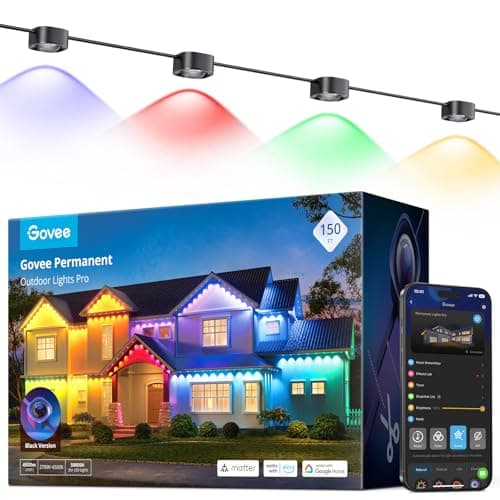
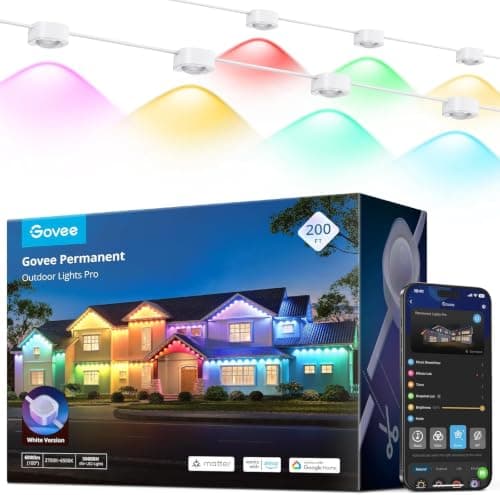
If you have done this before and are tired of it, the honest answer is permanent lighting — with the caveat that it is sparser than a traditional C9 run and it is a real commitment.
And if the last two Januaries have ended with a box of knotted strand, start at the other end entirely: read how to store Christmas lights before you buy anything else. Lights that come out of the box usable are worth more than lights that were slightly better when new.