How many lights it takes to wrap a trunk, a column or a shrub
Circumference times the number of wraps. Two measurements, one multiplication, and the difference between a finished job and a bare top third.
By Sawyer V. · Published
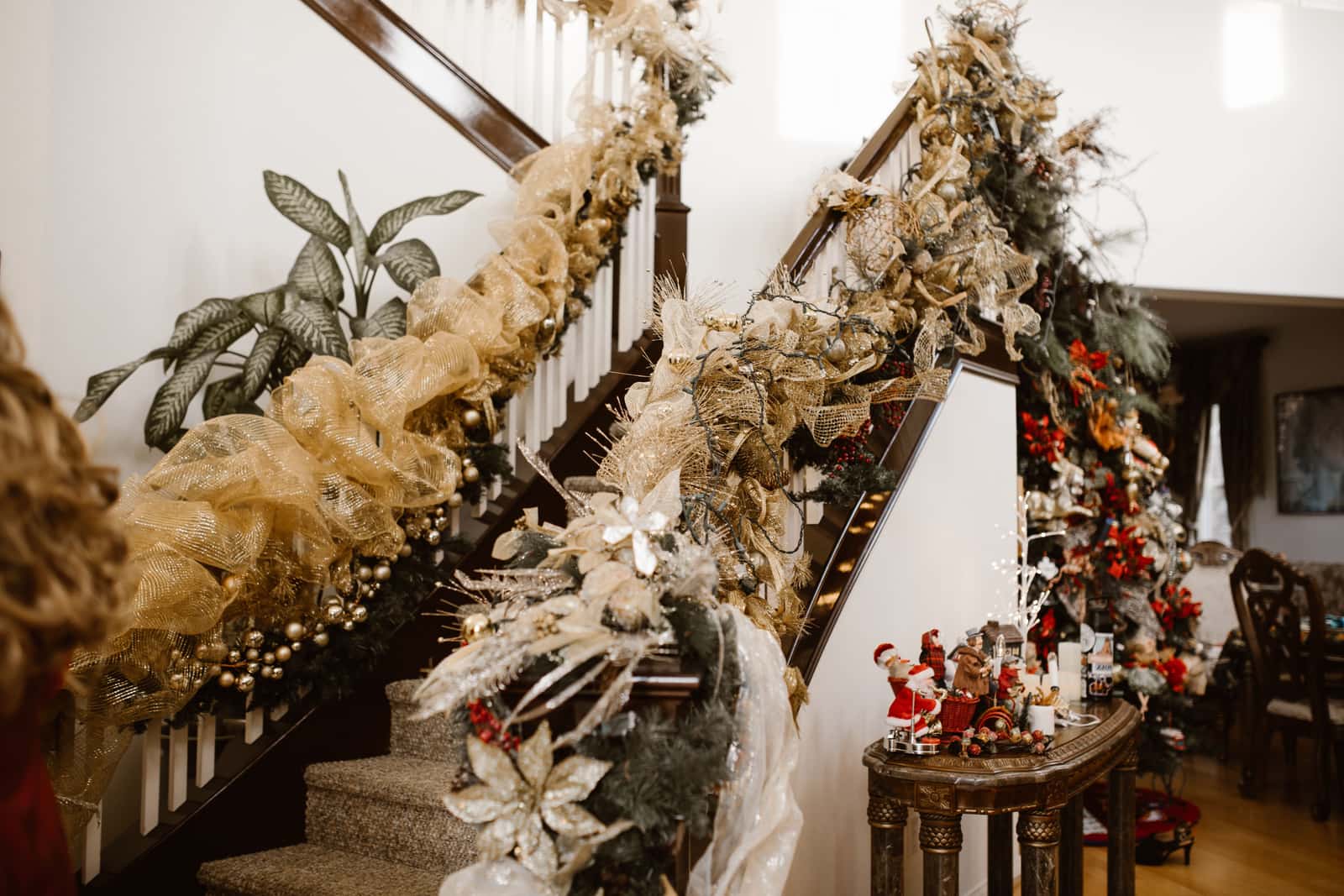
Outlining a roofline is a length problem: you measure the eave, you buy that many feet. Wrapping is a different problem entirely, and it is the one people consistently underestimate — because the strand does not travel the height of the trunk, it travels around it, many times over.
The arithmetic is two measurements and one multiplication. Get it right and a wrapped trunk looks deliberate from the street. Get it wrong and you run out at shoulder height, which is the single most recognizable mistake in outdoor decorating.
Wreath & Watt earns a commission on qualifying purchases made through the Amazon links on this page. It costs you nothing and it does not change the order of the picks — here is exactly how we are funded.
The formula, in one line
Feet of light needed equals the circumference of what you are wrapping, multiplied by the number of wraps. The number of wraps is the height you are covering divided by the vertical gap you want between turns.
The arithmetic
- Trunk circumference: measure it, or multiply diameter by 3.14
- Wraps = height covered / vertical gap between turns
- Feet needed = circumference x wraps
- Example: 24 in trunk circumference = 2 ft
- 8 ft of trunk at a 4 in gap = 8 ft / 0.33 ft = 24 wraps
- 2 ft x 24 wraps = 48 ft of lighted strand
An 8 ft section of a modest 24 in trunk swallows 48 ft of strand — one and a half 33 ft strings, for one tree.
That is why wrapping consumes strings at a rate outlining never does. A 100-count LED mini string publishes a 33-foot lighted length at 4-inch spacing, so the example above needs two of them and leaves a little spare. Two mature trees flanking a drive will take six to eight.
The gap between turns decides the look
A tight wrap reads as a solid column of light and eats strand; a loose wrap reads as a spiral and shows the bark between turns. Neither is wrong, but they are different decisions and they have very different bills.
| Vertical gap | Wraps over 8 ft | 24 in circumference | 36 in circumference |
|---|---|---|---|
| 2 in | 48 | 96 ft | 144 ft |
| 4 in | 24 | 48 ft | 72 ft |
| 6 in | 16 | 32 ft | 48 ft |
| 12 in | 8 | 16 ft | 24 ft |
Circumference is the distance around the trunk, not across it. If you measured the diameter, multiply by 3.14 first.
Source: Our arithmetic: wraps = height / gap, then feet = circumference x wraps. Every input is printed in the row.
Which string suits which job
Three details separate a string that wraps well from one that fights you: wire color, wire flexibility and how the string connects to the next one.
Wire color is the one nobody thinks about until daylight. A wrapped trunk is looked at in the dark for four hours and in daylight for twenty. Brown wire disappears on bark; white wire disappears on a painted column, a white railing or a flocked tree, and is glaringly obvious on anything dark. The same Northlight string is published in brown wire and white wire with identical specifications — 100 LEDs, 4 in spacing, 33 ft lighted length — so this is a free decision if you make it before you order.
Mapped strings are for the tree you look at closely. The 250-LED Twinkly string publishes 65.6 feet of length with individually addressable RGB and warm white LEDs, which is enough strand to wrap a trunk in one piece and then run effects along it. It publishes IP44, which is splash-rated: fine around a trunk or under an eave, still the wrong string for a gutter line or anywhere snowmelt pools. The full smart-lighting comparison is on smart Christmas lights.
Shrubs are not trunks. A dense shrub has no single axis to wrap and spiralling one by hand is an hour you will not enjoy. A 14.8 by 5 foot net drops over the whole thing in one movement and reads as even coverage. The published limit — a maximum of two sets end to end — is the number to plan a long hedge around.
Getting power to the base of the tree
A wrapped tree is usually the furthest thing from the house in the whole display, and the cord is doing the work. A 50-foot 16 AWG green outdoor cord publishes a 13 A rating on an outdoor SJTW jacket, and the green jacket is the point: it is the run you would rather not see crossing a lawn. For a heavier load, or where the cord feeds the whole display rather than one tree, step up to 14 gauge — the gauge argument is laid out on our cord comparison.
The order that saves an hour
Wrap from the base upward with the plug end at the bottom, so the male end finishes nearest the outlet and you are not left needing an extra ten feet at ground level. Test every string on the ground before it goes up. And wind them onto reels when they come down — a strand that was wrapped tightly around bark for six weeks is exactly the kind that turns into a knot in a box. The reel picks are on the best light storage reels.
Our picks for this
| # | Product | Best for | Score | Price |
|---|---|---|---|---|
| 1 |  Northlight LED mini lights, 100 count, 33 ft, warm white on brown wire100 LEDs, 4 in spacing, 33 ft lighted length Northlight LED mini lights, 100 count, 33 ft, warm white on brown wire100 LEDs, 4 in spacing, 33 ft lighted length | Trees, shrubs and wrapping — the workhorse string | 6.5/ 10 | |
| 2 |  Northlight LED mini lights, 100 count, 33 ft, white wireSame string, white wire Northlight LED mini lights, 100 count, 33 ft, white wireSame string, white wire | White railings, columns and flocked trees | 6.3/ 10 | $21.99Amazon #ad · Price as of October 20, 2026 · Disclosure |
| 3 |  Twinkly Strings, 250 RGB+W LEDs, 65.6 ft, app mapped250 mappable RGB+W LEDs over 65.6 ft, IP44 Twinkly Strings, 250 RGB+W LEDs, 65.6 ft, app mapped250 mappable RGB+W LEDs over 65.6 ft, IP44 | A tree you want mapped, not just lit | 7.5/ 10 | $149.99Amazon #ad · Price as of October 20, 2026 · Disclosure |
| 4 |  Net lights, 300 LED, 14.8 ft x 5 ft mesh, connectable14.8 ft x 5 ft, connect two sets max Net lights, 300 LED, 14.8 ft x 5 ft mesh, connectable14.8 ft x 5 ft, connect two sets max | Two-panel hedge runs | 6.5/ 10 | |
| 5 |  Iron Forge Cable 16/3 outdoor extension cord, 50 ft, green16 AWG, 13 A, 50 ft Iron Forge Cable 16/3 outdoor extension cord, 50 ft, green16 AWG, 13 A, 50 ft | Light runs you would rather not see | 8.5/ 10 | $32.99Amazon #ad · Price as of October 20, 2026 · Disclosure |
Scores are our own weighting of published manufacturer specifications, explained in full on how we research. They are not test results. We have not tested these products.
The picks, in detail
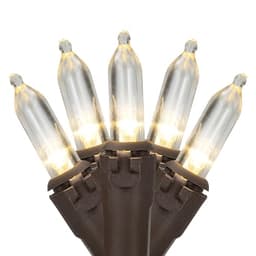
#1 — Trees, shrubs and wrapping — the workhorse string
Northlight LED mini lights, 100 count, 33 ft, warm white on brown wire
100 LEDs, 4 in spacing, 33 ft lighted length
6.5
/ 10
The default mini string. Buy the count you need for the tree, not the count that was on sale.
Published specifications
- Count
- 100 LED mini bulbs
- Spacing
- 4 in
- Lighted length
- 33 ft
- Bulb color
- Warm white
- Wire
- Brown
- Rated wattage per string
- Not published by the manufacturer
Our scoring
- Build
- 7 / 10
- Weather tolerance
- 7 / 10
- Serviceability
- 5 / 10
- Published specs
- 7 / 10
Good
- 4-inch spacing over 33 feet is the density most tree-wrapping guidance assumes
- Brown wire disappears against bark and trunk wraps, where white wire draws a line
- LED draw means you can run many strings on one circuit — see our amp guide
Watch out
- Wattage is not printed on the listing, so you have to read the tag on the string itself
- Brown reads as a visible line against a white railing — that is what the white-wire set is for
Specs from the Amazon listing (ASIN B073WK2J4Z), verified via the Creators API 2026-09-24. Replaces the discontinued green-wire version (B073WJBKPX) from the same Northlight line.
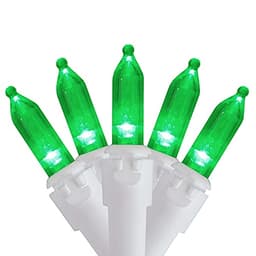
#2 — White railings, columns and flocked trees
Northlight LED mini lights, 100 count, 33 ft, white wire
Same string, white wire
6.3
/ 10
Buy the wire color that matches what it is stapled to, not what matches the bulbs.
Published specifications
- Count
- 100 LED mini bulbs
- Spacing
- 4 in
- Lighted length
- 33 ft
- Wire
- White
Our scoring
- Build
- 7 / 10
- Weather tolerance
- 7 / 10
- Serviceability
- 5 / 10
- Published specs
- 6 / 10
Good
- Wire color is the single most-ignored decision in outdoor lighting and the easiest one to get right
- Identical spacing to the brown-wire set, so runs stay consistent
Watch out
- Reads as a visible line against dark siding or an unflocked tree
#ad · Price as of October 20, 2026 · How we are funded
Specs from the Amazon listing (ASIN B073WZL6KG), retrieved 2026-09-04.
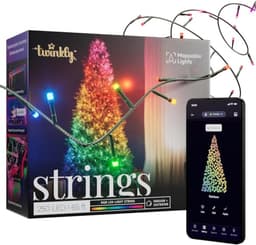
#3 — A tree you want mapped, not just lit
Twinkly Strings, 250 RGB+W LEDs, 65.6 ft, app mapped
250 mappable RGB+W LEDs over 65.6 ft, IP44
7.5
/ 10
The mapped pick, and a better one than the listing it replaces: same 250 LEDs, a real white channel and a published IP44. Buy it for one tree you look at closely, not for distance.
Published specifications
- LEDs
- 250, RGB plus warm white
- Length
- 65.6 ft
- Spacing
- 3.1 in (65.6 ft over 250 LEDs — our arithmetic)
- Wire
- Green
- Control
- App, individually addressable
- Use
- Indoor and outdoor
- Ingress rating
- IP44
Our scoring
- Control
- 10 / 10
- Published specs
- 9 / 10
- Weather tolerance
- 8 / 10
- Value per foot
- 3 / 10
Good
- Individually addressable LEDs are what make mapped effects possible — no ordinary string does this
- A dedicated warm white channel alongside the RGB, so the whites are a real white rather than a mixed approximation — the version of this string we used to rank had no white channel at all
- Publishes IP44, which puts it on the same honest footing as the rest of the Twinkly line here and makes it usable outdoors under an eave or around a trunk
Watch out
- Green wire rather than black, which shows more against dark bark and dark siding than the version this replaces
- IP44 is splash-rated and nothing more — it is still the wrong string for a gutter line or anywhere snowmelt pools
- Several times the price per foot of an ordinary LED string, and the app is doing the work
#ad · Price as of October 20, 2026 · How we are funded
Specs from the Amazon listing (ASIN B07WG2MFYS), verified via the Creators API 2026-10-16. Third listing in this slot: the 400 RGB+W / 105 ft (B086XJFXZH) was discontinued, then the 250 RGB / 66.5 ft (B086XJ17XV) which Amazon now shows as currently unavailable. This is Twinkly's own 250 RGB+Warm White at 65.6 ft, so the LED count holds and two things the previous listing had lost come back: the dedicated warm white channel and a published IP44 rating. The 66.5 ft length and the black wire are NOT on this listing — it is 65.6 ft on green wire — and the "no ingress rating" caveat carried on three pages has been withdrawn.
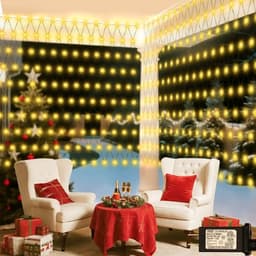
#4 — Two-panel hedge runs
Net lights, 300 LED, 14.8 ft x 5 ft mesh, connectable
14.8 ft x 5 ft, connect two sets max
6.5
/ 10
Nearly identical to our other net pick. Choose on which mesh size fits, and note the two-set connection limit.
Published specifications
- LEDs
- 300
- Mesh size
- 14.8 ft x 5 ft
- Modes
- 8
- Connectable
- Maximum 2 sets end to end
Our scoring
- Published specs
- 8 / 10
- Coverage
- 8 / 10
- Weather tolerance
- 6 / 10
- Serviceability
- 4 / 10
Good
- Publishes its connection limit, which most net lights leave you to discover
Watch out
- Two sets is a hard ceiling — a long hedge needs a second outlet
Specs from the Amazon listing (ASIN B094NBB584), retrieved 2026-09-04.
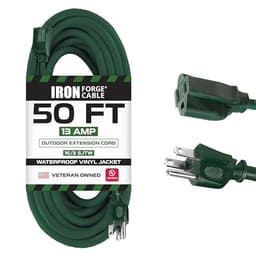
#5 — Light runs you would rather not see
Iron Forge Cable 16/3 outdoor extension cord, 50 ft, green
16 AWG, 13 A, 50 ft
8.5
/ 10
The right cord for LED strings and the wrong cord for incandescent ones. The gauge is the whole decision.
Published specifications
- Gauge
- 16 AWG, 3 conductor
- Jacket
- SJTW, outdoor rated
- Rating
- 13 A
- Length
- 50 ft
- Color
- Green
Our scoring
- Published rating
- 10 / 10
- Capacity headroom
- 6 / 10
- Outdoor jacket
- 9 / 10
- Usability
- 9 / 10
Good
- Green disappears across a lawn in a way orange never will
- 13 A published, so you know exactly where the ceiling is
Watch out
- 16 gauge is a smaller conductor: fine for LED strings, wrong for a run of incandescent sets
#ad · Price as of October 20, 2026 · How we are funded
Gauge and rating from the Amazon listing (ASIN B01JN1JRXW), retrieved 2026-09-04.
Questions
›How many feet of lights do I need to wrap a tree trunk?
Multiply the circumference of the trunk by the number of wraps, where wraps equals the height you are covering divided by the vertical gap between turns. An 8 ft section of a 24-inch-circumference trunk at a 4-inch gap needs 48 feet of lighted strand.
›Should I use green wire or white wire?
Match the wire to what it is wrapped around, because it is visible in daylight far longer than the bulbs are visible at night. Brown disappears on bark, green on evergreen; white disappears on painted columns, white railings and flocked trees.
›Can I wrap a shrub the same way?
You can, but a net is faster and looks more even. A dense shrub has no single axis to spiral around, so hand-wrapping tends to produce bright patches and dark hollows. Check the net’s published maximum connected count before planning a long hedge run.
›How tightly should I wrap?
Tight enough that the strand stays where you put it, loose enough that it is not biting into bark on a living tree. The vertical gap between turns is the setting that changes the look: 2 inches reads as a solid column of light, 12 inches reads as a spiral.
Sources
- Northlight LED mini, warm white on brown wire (ASIN B073WK2J4Z) — 100 count, 4 in spacing, 33 ft lighted length
- Northlight LED mini, white wire (ASIN B073WZL6KG) — same string, white wire
- Twinkly Strings 250 RGB+W listing (ASIN B07WG2MFYS) — 65.6 ft, 250 mappable RGB and warm white LEDs, green wire, IP44
- Net light listing (ASIN B094NBB584) — 14.8 ft x 5 ft, maximum 2 sets connected
- Iron Forge 16/3 outdoor cord listing (ASIN B01JN1JRXW) — 13 A, SJTW jacket, 50 ft
- Wrap arithmetic — Feet = circumference x (height / vertical gap). Circumference = diameter x 3.14.
We have not tested these products. Every figure above comes from a published manufacturer specification or from arithmetic shown on this page, and anything a maker does not publish is printed as unavailable rather than estimated. How that works, and what we will not claim, is set out on how we research.