Decorating a tree in the order that actually works
Lights deep before they go wide, ribbon before ornaments, filler before features. Six steps, and the string-count arithmetic behind the first one.
By Sawyer V. · Published
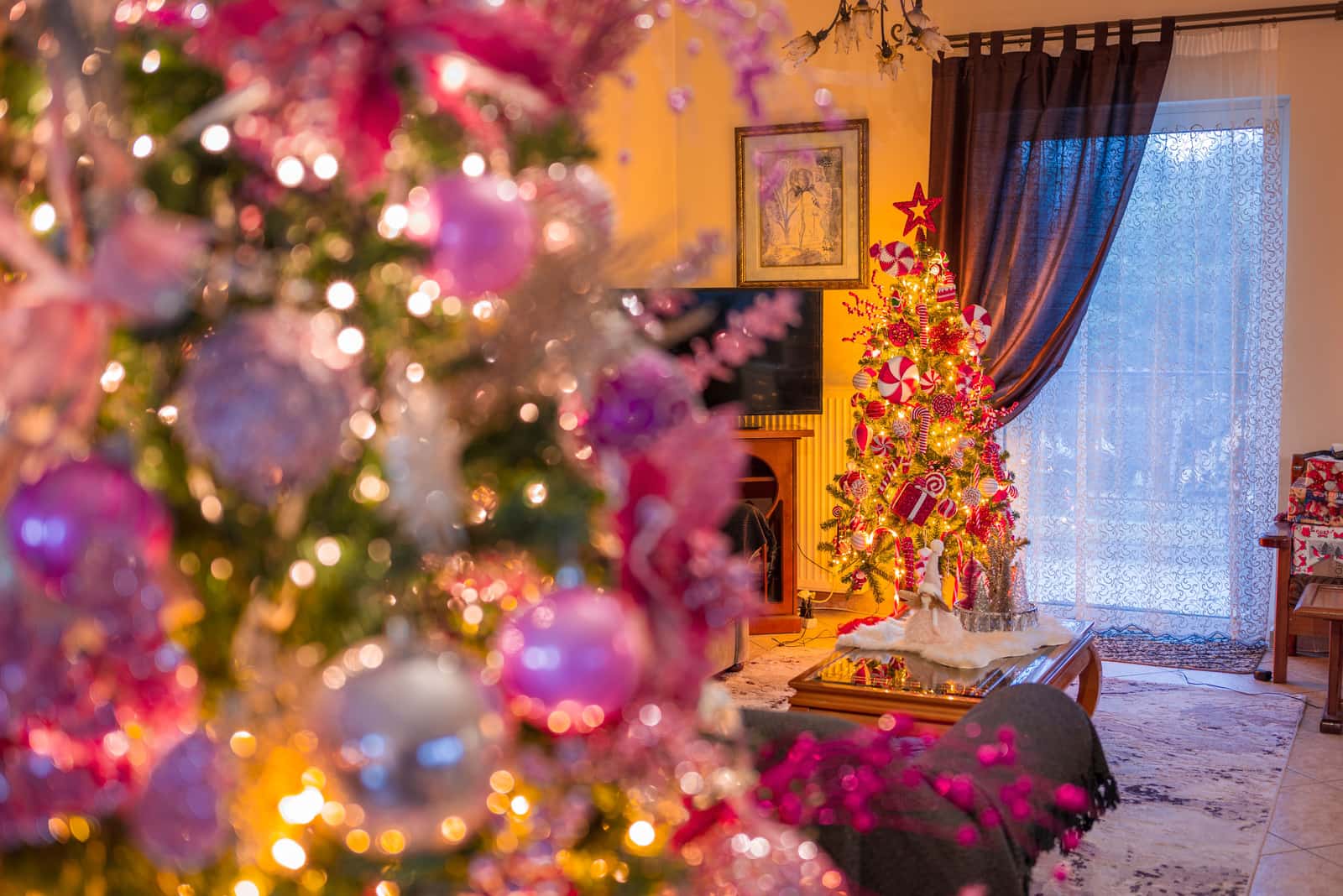
A tree that looks flat, or patchy, or somehow unfinished despite having plenty on it, is almost always a sequencing problem rather than a shortage of decorations. The order the layers go on decides whether they can do their jobs.
This is that order, with the arithmetic for the step people rush most — the lights — and a note on what each layer is actually for.
Wreath & Watt earns a commission on qualifying purchases made through the Amazon links on this page. It costs you nothing and it does not change the order of the picks — here is exactly how we are funded.
Step one: shape it, before anything goes on
Every layer after this one sits on the shape you build now, and no amount of decoration fixes a tree that was not opened out. Work section by section from the bottom, spreading each branch and turning the tips so they face outward and slightly up.
This is also where an unlit tree earns its place: the 1,346-tip unlit spruce can be shaped without working around a fixed light string, and its lighting is then a decision rather than an inheritance. The full shaping method is on tree assembly and shaping, and the pre-lit trade-off is on pre-lit vs unlit.
Step two: lights, deep before wide
The mistake is wrapping lights around the outside of the tree like a ribbon. Depth is what makes a tree glow rather than sparkle: run the string in toward the trunk and back out along each branch, so half the light comes from inside the foliage.
The arithmetic
- Classic convention: 100 lights per vertical foot
- A 7.5 ft tree: 7.5 x 100 = 750 bulbs
- A 100-count string: 750 / 100 = 7.5 strings, so 8
- Full look at 150 per foot: 1,125 bulbs = 12 strings
A 7.5 ft tree takes eight 100-count strings for a classic look and twelve for a full one. Most trees are lit with three.
A 100-count LED mini string at 4-inch spacing gives 33 feet of lighted length, which is the right format for this job — close spacing reads as continuous glow rather than as points. On a flocked or white-toned tree the white-wire version disappears in daylight, which matters because the tree is looked at in daylight far more hours than at night. Run the numbers for your own tree on the lights calculator, and check the total draw on the load calculator.
Step three: ribbon or garland, if you are using it
Ribbon goes on before ornaments, never after, because it needs to be tucked into the foliage and an ornament in the way makes that impossible. It also does a structural job: a vertical or spiralling run breaks the tree into sections, which is what stops a large tree reading as one undifferentiated mass.
A 9 ft pre-lit garland at 100 published lights works as a tree garland as well as on a mantel, and the tip density is the reason — at a published 100 lights it holds its own against the tree rather than looking like a wire draped over it. Length planning is on how much garland do I need.
Step four: ornaments, in three passes
Not one pass. Three, and in this order:
- Deep filler first. Plain ornaments hung close to the trunk, in the shadowed interior. Nobody looks at these directly and they do more for how full the tree looks than anything else.
- Then the mid layer. The bulk of the collection, hung at varying depths rather than all on the outer tips.
- Feature pieces last, at eye level. The ones with meaning go where people stand, not at the top where they read as texture.
Work around the whole tree at each pass rather than finishing one side. The count for each layer is on how many ornaments a tree takes, and everything comes off into a rigid divided box in January rather than a carton — the method is on how to pack ornaments.
Steps five and six: topper, then skirt
The topper goes on before the skirt for the practical reason that fitting it usually involves standing where the skirt would be, and often moving the tree. Measure for it before you buy the tree — a topper is commonly 8 to 12 inches, and an 8-foot ceiling does not take a 7.5-foot tree plus a topper plus a stand. The sizing is on tree size and tip count.
The skirt is last and it does two jobs: it hides the stand and it hides the cords. If the cord run is awkward, solve it before the skirt goes down rather than lifting it afterwards.
The check that finishes it
Turn off the room lights, switch the tree on, and look at it from where people will actually sit. Three things show up in that view and in no other: dark patches in the lighting, a side that received less attention, and any place where the trunk shows through. All three are ten-minute fixes at this stage and impossible ones once the presents are under it.
Our picks for this
| # | Product | Best for | Score | Price |
|---|---|---|---|---|
| 1 |  Northlight LED mini lights, 100 count, 33 ft, warm white on brown wire100 LEDs, 4 in spacing, 33 ft lighted length Northlight LED mini lights, 100 count, 33 ft, warm white on brown wire100 LEDs, 4 in spacing, 33 ft lighted length | Trees, shrubs and wrapping — the workhorse string | 6.5/ 10 | |
| 2 |  Northlight LED mini lights, 100 count, 33 ft, white wireSame string, white wire Northlight LED mini lights, 100 count, 33 ft, white wireSame string, white wire | White railings, columns and flocked trees | 6.3/ 10 | $21.99Amazon #ad · Price as of October 22, 2026 · Disclosure |
| 3 |  Best Choice Products unlit spruce, 7.5 ft, 1,346 tips1,346 tips, unlit Best Choice Products unlit spruce, 7.5 ft, 1,346 tips1,346 tips, unlit | Anyone who wants to choose their own lights | 6.8/ 10 | |
| 4 |  DOIOWN pre-lit garland, 9 ft, 100 LED, battery9 ft, 100 LED, trimmed and battery powered DOIOWN pre-lit garland, 9 ft, 100 LED, battery9 ft, 100 LED, trimmed and battery powered | A mantel or a single stair run | 5.3/ 10 | |
| 5 |  Hearth & Harbor ornament storage box, adjustable dividers, 128 ornaments128 ornaments, adjustable dividers, rigid plastic Hearth & Harbor ornament storage box, adjustable dividers, 128 ornaments128 ornaments, adjustable dividers, rigid plastic | The biggest published capacity here | 7.5/ 10 | $47.95Amazon #ad · Price as of October 22, 2026 · Disclosure |
Scores are our own weighting of published manufacturer specifications, explained in full on how we research. They are not test results. We have not tested these products.
The picks, in detail
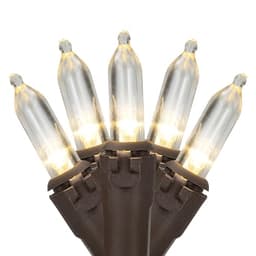
#1 — Trees, shrubs and wrapping — the workhorse string
Northlight LED mini lights, 100 count, 33 ft, warm white on brown wire
100 LEDs, 4 in spacing, 33 ft lighted length
6.5
/ 10
The default mini string. Buy the count you need for the tree, not the count that was on sale.
Published specifications
- Count
- 100 LED mini bulbs
- Spacing
- 4 in
- Lighted length
- 33 ft
- Bulb color
- Warm white
- Wire
- Brown
- Rated wattage per string
- Not published by the manufacturer
Our scoring
- Build
- 7 / 10
- Weather tolerance
- 7 / 10
- Serviceability
- 5 / 10
- Published specs
- 7 / 10
Good
- 4-inch spacing over 33 feet is the density most tree-wrapping guidance assumes
- Brown wire disappears against bark and trunk wraps, where white wire draws a line
- LED draw means you can run many strings on one circuit — see our amp guide
Watch out
- Wattage is not printed on the listing, so you have to read the tag on the string itself
- Brown reads as a visible line against a white railing — that is what the white-wire set is for
Specs from the Amazon listing (ASIN B073WK2J4Z), verified via the Creators API 2026-09-24. Replaces the discontinued green-wire version (B073WJBKPX) from the same Northlight line.
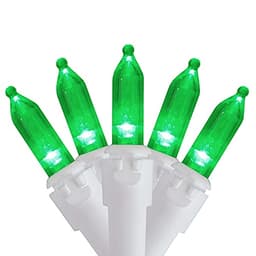
#2 — White railings, columns and flocked trees
Northlight LED mini lights, 100 count, 33 ft, white wire
Same string, white wire
6.3
/ 10
Buy the wire color that matches what it is stapled to, not what matches the bulbs.
Published specifications
- Count
- 100 LED mini bulbs
- Spacing
- 4 in
- Lighted length
- 33 ft
- Wire
- White
Our scoring
- Build
- 7 / 10
- Weather tolerance
- 7 / 10
- Serviceability
- 5 / 10
- Published specs
- 6 / 10
Good
- Wire color is the single most-ignored decision in outdoor lighting and the easiest one to get right
- Identical spacing to the brown-wire set, so runs stay consistent
Watch out
- Reads as a visible line against dark siding or an unflocked tree
#ad · Price as of October 22, 2026 · How we are funded
Specs from the Amazon listing (ASIN B073WZL6KG), retrieved 2026-09-04.
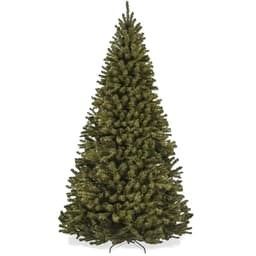
#3 — Anyone who wants to choose their own lights
Best Choice Products unlit spruce, 7.5 ft, 1,346 tips
1,346 tips, unlit
6.8
/ 10
The long-game choice. An unlit tree outlives every pre-lit one on this list, because the failure that kills them cannot happen.
Published specifications
- Height
- 7.5 ft
- Branch tips
- 1,346
- Lights
- None — unlit
- Base
- Metal
Our scoring
- Published tip count
- 9 / 10
- Density per foot
- 7 / 10
- Light provision
- 3 / 10
- Spec completeness
- 8 / 10
Good
- Unlit means a dead light section never retires the whole tree
- You pick the color temperature instead of inheriting it
Watch out
- You are buying and hanging 700-plus lights yourself, which is an hour you did not plan for
Tip count from the Amazon listing (ASIN B01L9X99GC), retrieved 2026-09-04.

#4 — A mantel or a single stair run
DOIOWN pre-lit garland, 9 ft, 100 LED, battery
9 ft, 100 LED, trimmed and battery powered
5.3
/ 10
The trimmed-and-lit pick. It arrives finished, which is most of the appeal; the tip count it no longer publishes is what you give up.
Published specifications
- Length
- 9 ft
- Lights
- 100 LED
- Power
- Battery
- Trim
- Berries, bows, pine cones and flowers
- Use
- Indoor and outdoor, per the listing
- Branch tips
- Not published by the manufacturer
Our scoring
- Published tip count
- 1 / 10
- Density per foot
- 5 / 10
- Light provision
- 9 / 10
- Spec completeness
- 6 / 10
Good
- 100 lights over 9 feet is roughly one every inch of lit length, which is the density that reads as lit rather than dotted
- Trimmed on arrival with berries, bows and cones, so a bare banister needs nothing added
- Battery means no cord down the stairs and no outlet at the mantel
Watch out
- No published tip count, so it cannot be compared on density with the garlands that publish one
- Battery means a cell change partway through December
- Nine feet does one banister run — a full staircase usually needs two or three
Specs from the Amazon listing (ASIN B0DCJZZZWR), verified via the Creators API 2026-10-04. Replaces the discontinued 9 ft / 100 light garland (B09YR6TYH3), whose published 252 branch tips no live garland here carries.
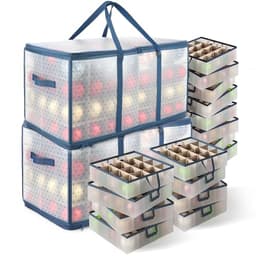
#5 — The biggest published capacity here
Hearth & Harbor ornament storage box, adjustable dividers, 128 ornaments
128 ornaments, adjustable dividers, rigid plastic
7.5
/ 10
The capacity leader, and the dividers actually move. Confirm your largest ornament fits one cell before committing the whole collection.
Published specifications
- Published capacity
- 128 ornaments
- Dividers
- Adjustable
- Shell
- Rigid plastic
- Maximum ornament diameter
- Not published by the manufacturer
Our scoring
- Published capacity
- 8 / 10
- Adjustability
- 9 / 10
- Crush resistance
- 9 / 10
- Stated size limits
- 4 / 10
Good
- Adjustable dividers are the difference between a box that fits your ornaments and one that fits the catalog's
- A rigid plastic shell survives a stack in a way a fabric box does not
Watch out
- Capacity assumes a standard ornament — no maximum diameter is published, so oversized baubles may not fit the grid
#ad · Price as of October 22, 2026 · How we are funded
Capacity and construction from the Amazon listing (ASIN B0BNJWSC1Y), verified via the Creators API 2026-10-04. Replaces the discontinued listing for the same Hearth & Harbor box (B09K9C332F); the published specification is unchanged.
Questions
›What order do you decorate a Christmas tree in?
Shape the branches, then lights, then ribbon or garland, then ornaments in three passes from deep filler outward, then the topper, then the skirt. Ribbon before ornaments is the step people get wrong — it has to be tucked in, and an ornament in the way prevents that.
›How many strings of lights does a 7.5 ft tree need?
Eight 100-count strings for a classic look at 100 lights per vertical foot, or twelve for a full look at 150 per foot. Most trees are lit with about three, which is why they look sparse.
›Should lights go on the inside of the tree?
Partly, yes. Running the string in toward the trunk and back out along each branch puts roughly half the light inside the foliage, which is what makes a tree glow rather than sparkle on its surface.
›Where should the best ornaments go?
At eye level, on the side people actually see. Plain filler ornaments go deep near the trunk where they make the tree look full without being looked at individually.
Sources
- Northlight LED mini listing (ASIN B073WK2J4Z) — 100 LEDs, 4 in spacing, 33 ft lighted length
- Northlight LED mini white wire listing (ASIN B073WZL6KG) — same string, white wire
- Best Choice Products unlit spruce listing (ASIN B01L9X99GC) — 7.5 ft, 1,346 tips, unlit
- Pre-lit garland listing (ASIN B0DCJZZZWR) — 9 ft, 100 LED, battery; no tip count published
- Hearth & Harbor ornament box listing (ASIN B0BNJWSC1Y) — 128 ornaments, rigid, adjustable dividers
- String-count arithmetic — Bulbs = height x lights per vertical foot; strings = bulbs / bulbs per string. The per-foot figures are this site's stated convention.
We have not tested these products. Every figure above comes from a published manufacturer specification or from arithmetic shown on this page, and anything a maker does not publish is printed as unavailable rather than estimated. How that works, and what we will not claim, is set out on how we research.